ِAfrah Nassir talked to me on October 22, 2026
 Watch on YouTube
 Listen on Spotify
 Listen on Apple Podcasts
We booked this conversation weeks ago. Then Sisi asked his parliament to send Egyptian troops to Saudi Arabia.
So here I am, an Egyptian, talking to a Yemeni about my government stepping into her country's war. Again.
Watch the full conversation:
We go back
Afrah and I first met face to face at the UN Human Rights Council in 2015, at the start of the war.
In 2017, CPJ gave her the International Press Freedom Award. She is Yemeni. She also held a Swedish passport. It didn't matter. The travel ban almost kept her out. I called it racism then, and I'd call it that now. Christiane Amanpour wrote to the State Department. Afrah came, and Christiane handed her the award.
"I was always covering Yemenis," she told me. "Then suddenly I became the story."
Looking back, she calls that time "innocence." Today, watching our colleagues killed in Gaza without the attention or action they deserve, including from the organization that honored her, she asks the question I've been asking since I left CPJ: who gets to be a worthy victim?
Important and not important
Yemen is breaking news when something explodes. A bomb. The Red Sea. Bab al-Mandab. And every time, the same question: who are the Houthis?
"We already told you," Afrah says.
Then the explosion is over and Yemen slides back under the carpet. Yemenis appear only as victims. Their political agency disappears. So do the roots of the war.
Her message to Western journalists: keep covering Yemen, not only when it's breaking news.
Two wars, one family
Afrah has roots in Ethiopia. Wars in both her countries have resumed at the same time. She still has relatives there.
"What my grandfathers went through, what my parents went through. We're in a continuous cycle."
Her point is simple. You can't bomb your way out of a war without dealing with why it began. Nobody dealt with the Saudi-led coalition's atrocities. When the UAE left Yemen earlier this year, nobody talked about its war crimes. She wrote about it. It got little attention. Meanwhile, the arms contracts keep flowing.
They agree on one thing
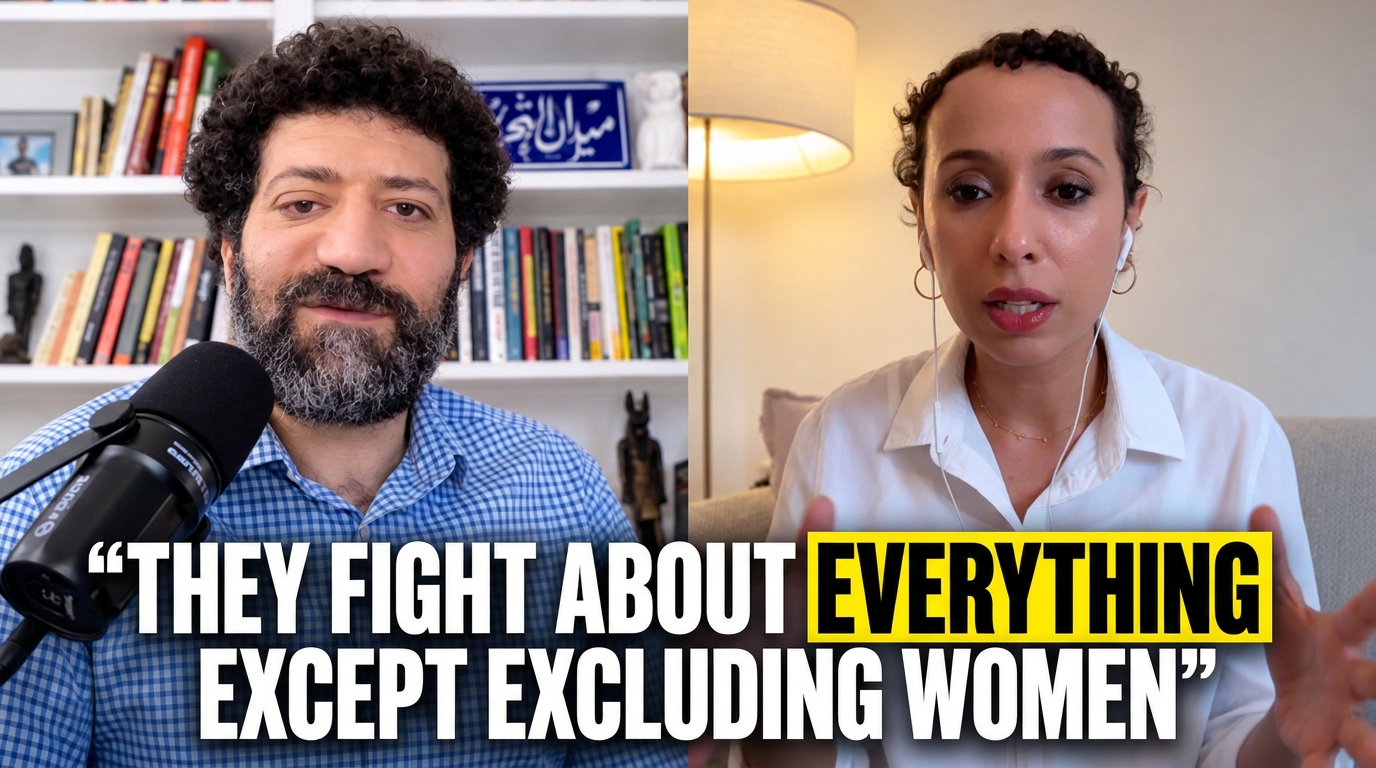
"The warring parties in Yemen fight about everything, but the one thing they agree on is excluding women."
The government appointed a few women ministers, under international pressure. Afrah calls it "just a decor."
Meanwhile, in every village, women are doing the real work. Resolving conflicts. Holding together what's left of the social fabric. She met many of them while working on gender inclusion at the UN Envoy's office.
"We Yemeni women, if we're given the chance, this war will be over very, very soon."
I heard the same from Sudanese women earlier this season. I'll hear it again next week, on Afghanistan.
Egypt
I ended with an apology. I've done it for Gaza. I've done it for Ethiopia. Yemen fits the same pattern: the Egyptian government, then and now, putting its weight on the wrong side of history.
Afrah was more careful than me. It's too early to know what Egypt's role will be, she said. The Saudi pact with Pakistan and Turkey didn't change anything on the ground either. But Egypt is already paying for the Red Sea.
I hope whatever Cairo and Riyadh decide does not mean more suffering for Yemenis at Egyptian hands.
What gives her hope
"Tyranny's best tool is despair. Resistance is within me. It's just not to despair."
Read Afrah on the UAE: https://dawnmena.org/withdrawal-without-accountability-the-uaes-unanswered-crimes-in-yemen/
