A platform amplifying voices from the Global South and its diasporas — tackling the future of democracy, liberation, peacebuilding, and justice.
Our goal is not merely to discuss problems but to elevate ideas, stories, and solutions emerging from communities that are too often marginalized in global conversations.
The podcast will be framed around several core questions:
Who gets to shape global narratives?
What can the Global South teach the world?
How do communities rebuild after conflict and repression?
What role do women play in peacebuilding and social transformation?
How do migration and diaspora communities reshape identities and politics?
Sudan, Episode II — Maha Tambal
Maha Tambal is a Sudanese researcher, development professional and foreign policy expert. At DT Institute she runs women-led and youth-led initiatives, including the Sudanese Peace Network. She has worked on Sudan from inside the country, in Washington, at the UN and in the EU.
In this episode she argues that in the absence of a durable political solution, Sudanese communities are building their own localized peace — in shelters, in refugee camps across the borders, in the diaspora, and online — and that these initiatives inherit a legacy, not an emergency. Sudanese have toppled dictatorship three times since independence.
She describes what the funding cuts since 2025 have taken away, and what resilience actually requires: small, flexible, direct support to local actors rather than large intermediaries.
She explains why Sudan sits fourth on the world's agenda, and what it would take to change that — not a moral appeal but a comprehensive package built on interests policymakers already recognize, from Bab al-Mandab to the price of oil.
And she makes the case on accountability. External actors are profiting from resource smuggling, illicit financial flows and money laundering while facilitating weapons trades and covering up violations — and they are shielded by great powers. The evidentiary link between financial crime and human rights violations, she says, is admissible before international mechanisms. The question is whether anyone will use it, or whether accountability becomes a bargaining chip traded for a safe exit.
“His name is Sandikrau. He has no electricity. He drives four miles to access internet so he can show up for meetings. And he shows up every day. There are millions of this guy — women, youth and men who just believe in what they do and keep doing it. That's why we need to show up for them."
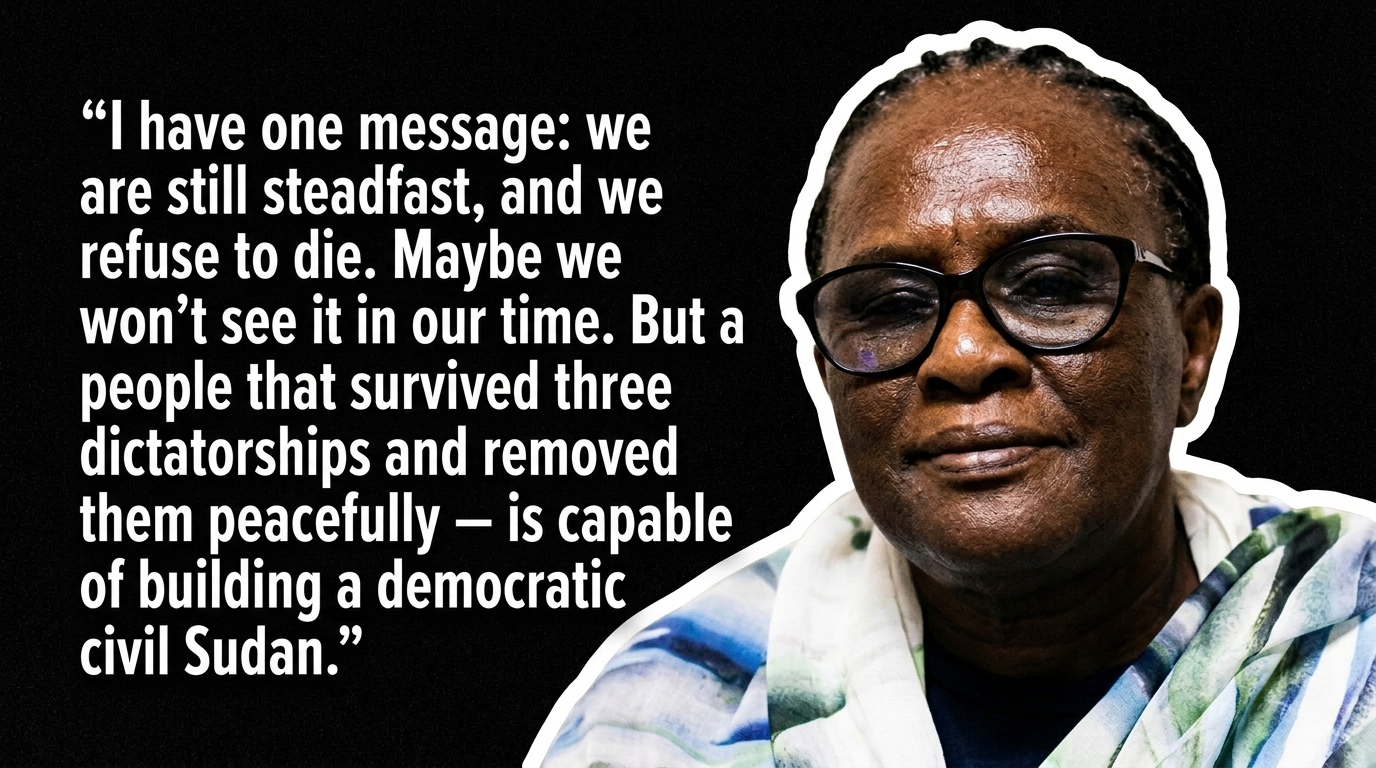
Arabic conversation with Sudanese advocate Ilham Ibrahim
Ilham Ibrahim is the executive director of the Sudanese Organization for Research and Development — SORD — a feminist civil society organization founded in Khartoum in 2007 and now operating from eastern Sudan and outside the country, after its Khartoum office was looted on the first day of the war.
She tells me: "I have one message: we are still steadfast, and we refuse to die. Maybe we won't see it in our time. But A people that survived three dictatorships and removed them peacefully — is capable of building a democratic civil Sudan."
Prologue
This is my story, in my own words, and I'm telling it for the people now calling for accountability from mainstream newsroom leaders who played a complicit role in the erasure of Palestinian journalists.