Sudan, Episode II — Maha Tambal
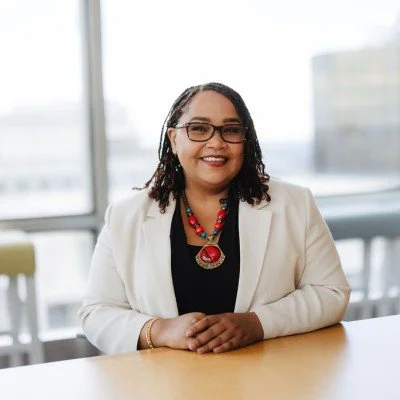
Maha Tambal is a Sudanese researcher, development professional and foreign policy expert. At DT Institute she runs women-led and youth-led peacebuilding initiatives, including the Sudanese Peace Network. She has worked on Sudan from inside the country, from Washington, at the UN and in the EU.
Watch on YouTube: https://youtu.be/5apDGoLUI5M
Listen to the full conversation
Spotify: https://open.spotify.com/episode/1Q4QertRHgG3yA96toExUW
The first Sudan episode, with Ilham Ibrahim of SORD, is here: https://www.janoubgroup.com/podcast/grj20ncu12iz06tcxpewsn9cz39c1r
On why local initiatives, and not waiting
"In the absence of a durable political solution or a durable humanitarian truce, people need to do their own localized peacebuilding their own way. They need to find their own way. They need to find their own approaches."
"At the end of the day, someone should really continue to keep doing this work. It just couldn't stop."
On whether she is still optimistic
She refused the question. It isn't about 2013, or 2018, or 2019.
"Sudanese people were able to topple dictatorship three times in their history since independence. In seventy years or so, that's a legacy. It didn't happen in too many countries. It feels like this is something in Sudanese people's genetics."
I asked where that movement lives now. Her answer: in the shelters where displaced people get food and services. Across the borders, in the refugee camps. In the diaspora, where the civilian movement rebuilt itself in exile. And online, where youth networks coordinate.
The war decentralized Sudanese civic life. She reads that as a strength.
"There is one day that this conflict will stop. Before we know it, it will stop."
On what the funding cuts took
Field access. Humanitarian distribution. Human rights documentation. The spaces built for survivors of gender-based violence. Frontline responders and the emergency response rooms.
What replaced the premises and the vehicles is remote work and small direct transfers to local actors.
"When you share a small amount of money, it means a lot in the field. And if we were able to continue that small amount, it's about the continuity."
On why Sudan is fourth
"Sudan crises are now coming in the fourth place — after Ukraine, Gaza, Iran."
Her answer to that is not a moral appeal.
"If you ask a US policymaker, they would say: why would Sudan matter to the US? You really need to make sure your message reflects the national security importance, the economic incentives, the commerce incentive."
"They started to feel the closure of the Strait of Hormuz. What does that mean for oil prices here in the US? If they want to use Bab al-Mandab and the Red Sea, they need to ensure this area is secured. And how do I ensure the security of this area? When Sudan is stabilized, and when the whole region is stabilized."
On the external actors
Three or four decades of Sudan as a stage for regional hegemony. What is new is the economics: resource smuggling, illicit financial flows, money laundering, facilitating weapons trades, covering up violations.
"Those external actors are protected by great powers. That makes holding them accountable so limited. Unfortunately it doesn't seem realistic. They would always find their way through a political bargain or a political deal."
What she would demand of them in any permanent ceasefire:
"Hey, you guys, you need to keep your hands off Sudan. Stop facilitating weapons trades, stop funding or financing these activities, legalize your involvement in resource extraction — make them accountable by law."
On accountability
This is her field — corruption as a driver of conflict. And it produces a specific legal opening.
"There is an evidentiary connection between money laundering, resource smuggling, and human rights violations. Some of that evidence is admissible before international accountability mechanisms."
"We couldn't have a durable peace solution where we bring justice to victims without addressing the accountability issue. We just can't do it. It's their right. Victims have the right to justice. And justice means accountability."
"I can't imagine a woman who lost her kids or lost her husband in Darfur or in Kordofan. They just tell her that the people who did that to you, they get away safe, and now you need to go back home and just live your life normally. This can't happen."
"If history is telling us anything, perpetrators always find their way to get away from accountability."
Her closing
"He has no electricity. He drives four miles to access internet so he can show up for meetings. And he shows up every day. There are millions of this guy — women, youth and men who just believe in what they do and keep doing it. That's why we need to show up for them."
She was talking about a colleague in Sandikrau, a rural area of Darfur.
And on what Sudanese organizations actually need:
"We need a lot of prayers and best-of-luck wishes, because we're barely surviving. It's the whole resource sustainability thing — but hopefully we'll be able to identify additional resources to continue working with Sudanese people."
"Sudan 1.5: GBV, Shared Healing, and Women-Led Accountability Across Sudan, Libya, and Yemen"
Janoub Group & the Sudan- and Uganda-based SORD (Sudanese Organization for Research and Development) launched this initiative to bring Sudanese women human rights defenders (WHRDs) into dialogue with women peace leaders from Libya and Yemen — contexts where similar patterns of weaponized sexual violence, institutional collapse, and women's exclusion have played out — to build shared insight, collective healing, and a regionally-grounded accountability track.
Partners come from Sudan, Uganda, Ethiopia, and Egypt, in addition to experts from Yemen, Libya, and Syria.
More info at: https://www.janoubgroup.com/projects
