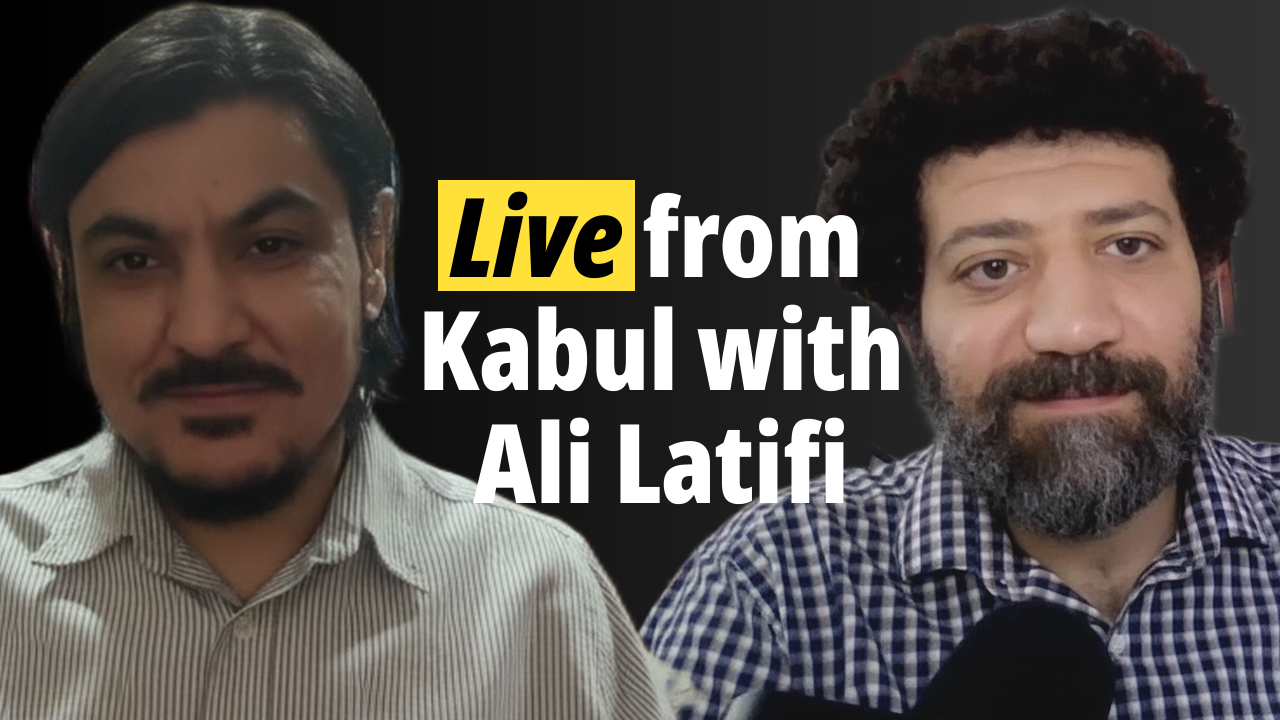
Ali Latifi spoke to me on October 27, 2026
 Watch on YouTube
 Listen on Spotify
 Listen on Apple Podcasts
Nobody is voiceless
This episode was not part of my plan.
I said Janoub would move across the Global South: Gaza, Sudan, Ethiopia, Yemen. Then Ali Latifi got in touch and asked, why not Afghanistan?
Honestly, that was a sign of my own ignorance. The more I read, and the more I talked to Ali, the more I understood this belonged on the road.
So we did our first live interview. Me in Silver Spring. Ali in Kabul.
Not by accident
Ali was born in Kabul and raised in Little Kabul, California. His grandfather was a journalist. He went to Al Jazeera English because it showed him "it was possible for people that look like us" to have a role in the media. In 2013, he moved home.
He doesn't believe anyone is born voiceless.
"If someone is voiceless, that's not by accident. Certain systems had to be established, certain events had to take place, certain policies had to be made."
Paris
He gave me the best example I've heard in a long time.
He was at the gym, listening to a major US paper's podcast about protests in France. The reporter had lived in Paris for years. Twenty minutes. Not one French voice. No shopkeeper. No student. No one from the boulangerie downstairs.
"If you can do that to Paris, what hope does someone in Dhaka or Beirut or Bogotá have?"
And a US headline from 2016 about "one of Afghanistan's most dangerous roads": Kabul to Jalalabad. A trip tens of thousands of Afghans make every day. "It's like going from LA to San Diego."
Pushed home
Iran and Pakistan are expelling Afghans by the hundreds of thousands. Ali calls it what it is: the same anti-refugee script you hear everywhere. "Whether you're calling them bad hombres or in Urdu you call them namak haram, it's the same concept."
He met Afghans at the Torkham crossing holding Afghan citizen cards issued by Pakistan. "Look, we had these, and now they're useless."
What engagement can look like
I asked him about his argument that punishing the Taliban has punished everyone but the Taliban.
His answer: start from what is still possible. Women still work as journalists, with their faces covered. Women still run private businesses, and what they lack is funding. Banking restrictions hit Afghan women too.
Saying nothing is possible for Afghan women, he argued, takes their agency away.
Occupation of the mind
When I asked about independence, a theme running through this whole season, he told me what he said in a college class asking whether the nation state still matters:
"It matters if you don't have one. It matters if you're Kashmiri. It matters if you're Baluchi. It matters if you're Palestinian. And it matters if you're Afghan."
Twenty years, more money than the Marshall Plan, and still no 24-hour electricity. A former adviser to the president once asked why there were no factories. The answer: "Find me electricity and I will build you a factory."
"Occupation of the land is one thing. Occupation of the mind, that's even worse."
Not surrendered
What gives him hope is Afghans refusing to give in. Girls paying for private language courses after school was taken from them. Women doctors driving to Herat after the 2023 earthquakes, without a male guardian. Male students and fathers protesting school closures.
And after the Kunar earthquake, a young man with a heart condition sitting at the foot of the mountain. He couldn't make the climb, so he collected money and handed it to friends coming down, so they could carry supplies back up.
"The Afghan people, despite the way the media plays it, have not surrendered, have not given in."
I learned a lot. I hope you do too.
